On March 16, 2025, a delegation from the College of Environmental Science and Engineering at Harbin Institute of Technology (HIT), led by Dean and Deputy Party Dean Liang Heng, visited the College of Environmental Science and Engineering (CESE) at Tongji University for an exchange and discussion session aimed at fostering cooperation. The HIT delegation included Zhang Xinping, Party Dean and Vice Dean; Wei Liangliang and Wang Wei, Vice Deans; Bai Langming, Special Assistant to the Dean; and Guo Liang, Deputy Director of the Experimental Centre.
Representing CESE were Xu Bin, Secretary of the College Party Committee; Dean Wang Zhiwei; Deputy Secretaries Zhou Shangjiu and Lu Lijun; Vice Deans Wang Ying and Wu Deli; and Professor Liu Jia, Deputy Director of the National Experimental Teaching Demonstration Center for Environmental Science and Engineering. The meeting was chaired by Xu Bin.
The exchange aimed to deepen mutual understanding and explore avenues for comprehensive collaboration in environmental science, particularly in areas such as joint research, talent cultivation, experimental teaching, and innovation-driven development. Both parties expressed their commitment to building a platform for strategic cooperation, sharing best practices, and working together to address pressing environmental challenges through interdisciplinary and inter-institutional collaboration.
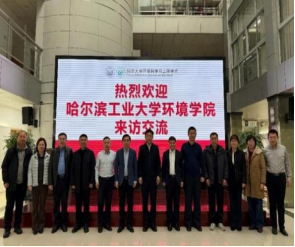
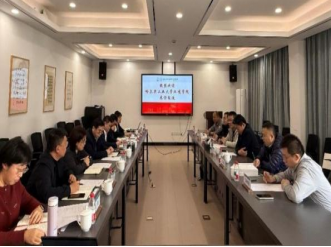
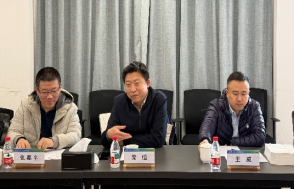
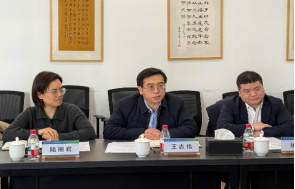
Xu Bin warmly welcomed the visiting delegation from the College of Environmental Science and Engineering at HIT. During the meeting, both institutions introduced the foundational structure, academic strengths, faculty composition, research accomplishments, and international collaboration efforts of their respective colleges. Dean Liang Heng highlighted HIT's initiatives in nurturing talent, advancing scientific research, and expanding global engagement, while Party Dean Zhang Xinping emphasized the importance of broadening international horizons. In turn, Dean Wang Zhiwei shared CESE’s experiences in pioneering innovative talent development models, advancing discipline construction, providing social services, and fostering international cooperation.
The discussion session featured in-depth dialogue on key issues such as talent cultivation strategies, enrollment policies, academic program development, laboratory platform enhancement, the commercialization of research outputs, faculty motivation systems, and internationalization efforts. This exchange significantly deepened mutual understanding and strengthened the relationship between the two colleges. A consensus was reached to collaborate across various domains, including education, research, public service, and global engagement, establishing a robust foundation for promoting the high-quality and integrated development of environmental science.


 中文
中文 Tel 021-65983869
 Wechat